
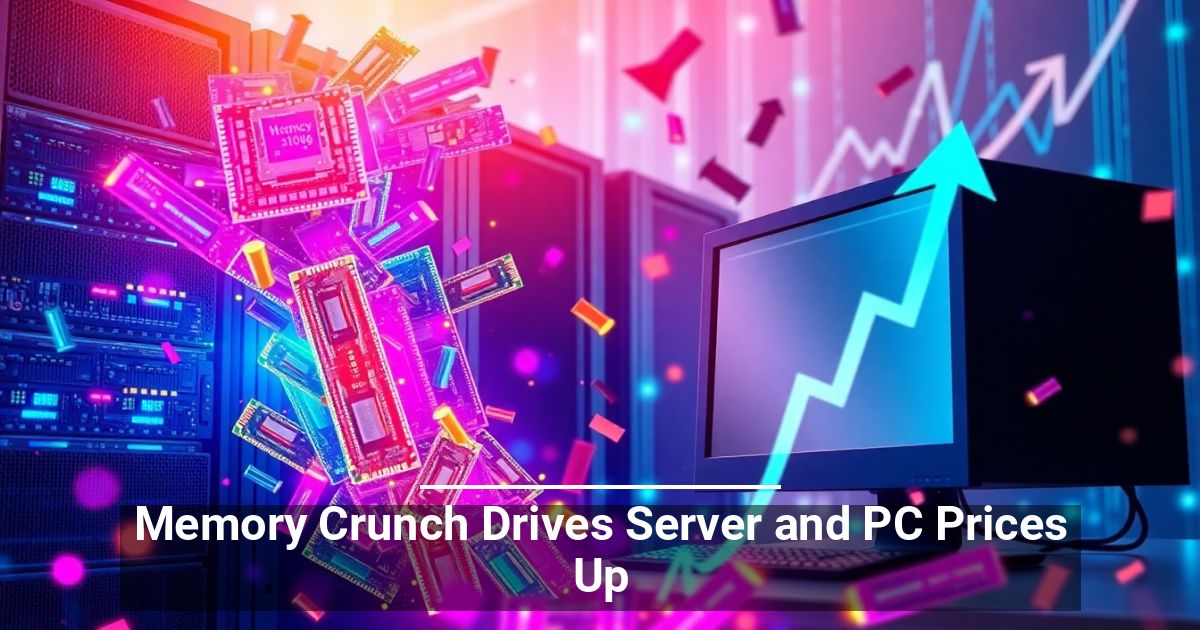
 The tech hardware market is under pressure, and business owners are starting to feel it in their budgets. The memory crunch driving server and PC prices up isn't just a blip. It's a full-on shift in the tech supply chain that’s unlikely to change anytime soon.
Understanding how High-Bandwidth Memory (HBM), Dynamic Random Access Memory (DRAM), and AI demand are affecting prices can help companies plan smarter upgrades and avoid surprise costs.
Why Servers and PCs Suddenly Cost More
AI data centers are at the heart of the sharp rise in the cost of memory-related components. AI servers require massive amounts of advanced memory, especially HBM and high-end DRAM. To keep up with booming demand for AI, manufacturers are prioritising these high-margin products.
That shift leaves fewer memory chips available for traditional consumer and business hardware, creating a classic supply squeeze. Standard hardware now competes for scraps, driving up the cost of computer components across the board.
Recent reports show DRAM prices have already surged around 50% in 2025, with Counterpoint Research forecasting another 30% jump in Q4 and potentially 20% more into early 2026. TrendForce has revised its Q4 outlook upward to 18-23% growth for server DRAM. In some cases, prices for key modules have doubled or more since early this year.
How This PC and Server Price Increase Hits Your Bottom Line
The rising costs of computer components show up in real-world purchasing decisions. It costs more (and takes longer) for companies to get new servers and PCs for employees. The memory shortage's impact on hardware also means vendors can’t offer generous discounts since they have to manage costs.
For business owners, this translates to real pain when refreshing IT infrastructure. Even routine hardware refresh cycles are more expensive, especially for companies that rely on memory-heavy systems such as analytics platforms, design software, or virtualization. Servers loaded with AI-capable configurations are feeling the squeeze most, but even standard business machines aren't immune to the memory crunch's impact on server PC prices.
Smart Ways To Stay Ahead of the Price Surge
Although prices are going up, you don’t have to panic or sit back and absorb the impact. Proactive steps to keep you on track and on budget include:
- Review upgrade timelines. Pricing hardware replacements sooner rather than later may help avoid further increases tied to the memory crunch in server PC prices.
- Prioritize critical systems. Focus spending on servers and PCs that directly support revenue or security.
- Extend hardware lifecycles. Adding memory or storage to existing machines may be cheaper than replacements.
- Consider alternatives. Consider refurbished or secondary market options for non-critical systems, or shift more workloads to cloud providers.
- Budget flexibly. Include a 15-25% buffer for IT hardware in your 2026 planning.
Planning for a Tighter Hardware Market
Analysts expect AI-driven memory demand to remain strong, which could keep pressure on standard PC and server components.
For business owners, awareness is the first step. Understanding why prices are rising and planning purchases strategically helps you navigate the market without letting the memory crunch on server and PC prices derail growth.